


10 reasons to bring microstructure analysis in-house

Inefficient product development and quality control through outsourced microstructure analyses? In-house analyses are faster, more independent and increase productivity.
In today's fast-moving and technology-driven industrial landscape, efficient processes in product development and quality control are crucial. With microstructure analyses, you can quickly check your processes. This makes them a key component for research and development as well as for quality control in laboratories.
When these analyses are outsourced, companies not only lose valuable time but also become dependent on the subjective assessments of external partners.
In this article, we explore ten reasons why implementing in-house microstructure analysis can be an essential step towards obtaining fast, independent results.
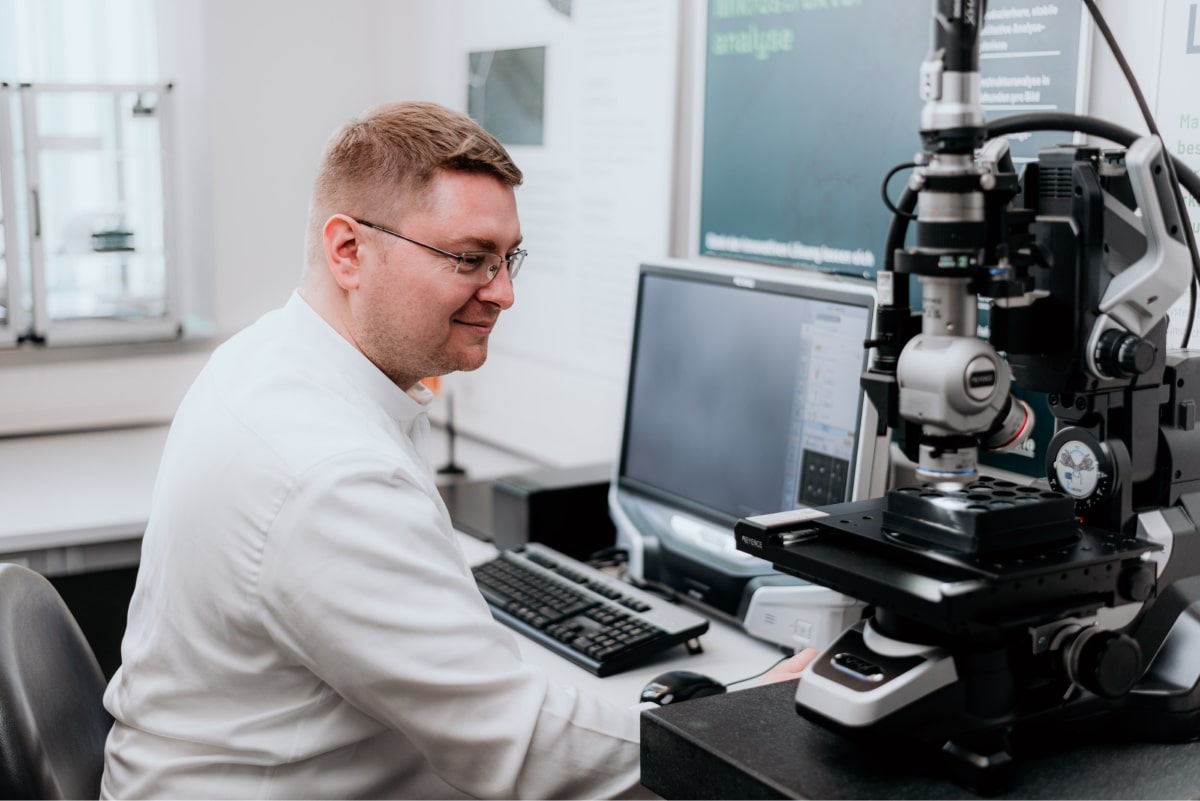
1. On-site analyses for faster decision-making
The implementation of on-site analyses enables companies to check the quality and specifications of their materials in real time. This leads to faster feedback and enables immediate adjustments in the production process if necessary. Reducing the waiting time for analysis results is not only efficiency-enhancing, but also helps to reduce overall costs as potential problems can be identified and resolved more quickly. Overall, the ability to perform microstructure analyses on site leads to a more agile, responsive and cost-efficient production environment.
2. Detect errors at an early stage thanks to continuous analyses
By immediately identifying irregularities or deviations in the materials, companies can act proactively before these errors escalate into major problems. This is particularly important in order to avoid costly complaints and production downtime. Continuous in-house analyses therefore not only contribute to maintaining product quality, but are also a crucial tool in risk management and quality assurance. They enable companies to guarantee a high standard of quality while protecting the integrity of their products and brands.
3. Immediately available analysis results for faster process optimisation
A decisive advantage of modern microstructure analysis is the immediate availability of the analysis results. This immediate feedback is invaluable for the rapid adaptation and optimisation of production processes. In an environment where every second counts, the direct evaluation of material data enables companies to react promptly to challenges and make necessary changes to production processes or material compositions. This not only leads to more efficient production, but also to improved product quality. The ability to quickly adapt processes based on up-to-date data is a key competitive advantage in the fast-moving world of manufacturing and materials science. It enables companies to remain agile, utilise resources effectively and ultimately strengthen their market position. Translated with www.DeepL.com/Translator (free version)
4. In-house analyses protect intellectual property
Conducting analyses in-house offers another, often overlooked advantage: the protection of intellectual property. In many industries, material compositions and processing techniques represent valuable and sensitive knowledge that is critical to a company's competitive advantage. When analyses are carried out outside the company, for example in external laboratories, there is always a certain risk that confidential information could be disclosed. In-house analyses, on the other hand, ensure that all data and knowledge about materials and manufacturing processes remain within the company. This not only protects intellectual property, but also the integrity of production secrets and the company's innovative strength. In an age where information is easily accessible and exchangeable, protecting intellectual property through in-house analyses is a crucial factor in maintaining market leadership and the ability to innovate.
5. Save cost long term
Although setting up an in-house laboratory for microstructure analyses initially represents a significant investment, the long-term financial benefits should not be underestimated. Companies that invest in in-house analytical capabilities can secure significant savings over time, particularly with regard to the costs normally incurred for external analytical services. These savings result from the reduction in fees for external laboratories, the elimination of transport costs for samples and the minimisation of waiting times often associated with external analyses. In addition, an in-house laboratory enables faster responsiveness and process optimisation, which indirectly leads to further cost savings by reducing waste and inefficient production processes. In the long term, investing in an in-house laboratory therefore leads to a significant reduction in overall expenditure and helps to increase operational efficiency and competitiveness.
6. On-demand analyses increase flexibility
The implementation of in-house analyses in production and research facilities offers a decisive advantage: greater flexibility. By conducting analyses on demand, companies are no longer tied to the schedules and availability of external service providers. This independence makes it possible to perform tests exactly when they are needed - whether to examine a newly developed material, quickly diagnose a production problem or carry out regular quality checks. This flexibility is particularly valuable in dynamic production environments, where rapid adjustments and decisions are often critical to success. In-house analyses allow companies to remain agile and responsive by retaining control of their testing and analysis processes and integrating them seamlessly into daily operations, for example with MiViA's analysis tool.
7. Data availability increases capacity for Innovation
The immediate availability of microstructure data in in-house laboratories is a key factor in supporting the innovative capacity of research and development departments. When teams have direct access to detailed material data, they can develop, test and refine new ideas more quickly. This data provides valuable insights into the properties and behaviour of materials under different conditions, which is essential for developing innovative products and solutions. The ability to access this information quickly and without delays accelerates the entire innovation process. Teams can test hypotheses in real time, make adjustments and work iteratively, leading to more efficient and effective product development. In a world where competition increasingly depends on the speed and quality of innovation, the immediate availability of microstructure data is a decisive advantage.
8. Personnel development contributes to the development of internal expertise
Operating an in-house laboratory for microstructure analyses is not only a benefit for a company's production and research processes, but also represents a valuable investment in personnel development. By working with advanced analytical methods and technologies on a daily basis, employees build up in-depth technical expertise. This ongoing hands-on experience fosters an understanding of materials science and analytical techniques, leading to an overall increase in technical expertise within the organisation. Employees who are directly involved in analysing and evaluating data develop a better understanding of the materials and processes they work with.
This in-depth knowledge not only contributes to individual professional development, but also strengthens the innovative power and problem-solving ability of the entire company. At a time when specialist knowledge and technical skills are becoming increasingly valuable, promoting internal expertise by running your own laboratory is a decisive step towards remaining competitive in the long term.
9. Use own material analyses for better customer service
The ability to carry out your own material analyses has a direct and positive impact on customer service. Companies that are able to respond quickly and accurately to customer enquiries with detailed material analyses offer significant added value. This responsiveness is particularly important in industries where material specifications and quality are critical. Customers appreciate the rapid provision of sound data and analyses that help them to make informed decisions. This level of service not only contributes to customer satisfaction, but also strengthens trust in the company.
In an increasingly competitive business environment, the ability to provide comprehensive and rapid analyses can make a decisive difference and foster long-term customer relationships. By expanding their analytical capabilities in-house, companies position themselves as reliable partners with the expertise required to provide their customers with the best possible service.
10. rapid adaptability brings long-term competitive advantages
In today's fast-moving business world, a company's ability to adapt quickly and efficiently to market changes is a decisive factor for long-term success and competitiveness. Companies that are agile and can react quickly to new trends, customer requirements or technological developments secure a significant advantage over the competition. This adaptability is particularly evident in areas such as materials science and production, where the rapid integration of new knowledge and technologies has a direct impact on product quality and innovation rates. Companies that have the internal capacity for rapid analysis and research are able to optimise their processes and products efficiently and thus react more quickly to market changes. This proactive attitude enables them not only to follow trends, but also to actively shape them and thus strengthen their market position. In the long term, it is these adaptable and responsive companies that are able to achieve sustainable growth and compete successfully in a constantly changing market environment.
Conclusion
The integration of in-house microstructure analyses is more than just an investment in equipment and technology; it is an investment in the future viability and competitiveness of your company.
By improving decision-making, quality control, innovation and customer relations, this strategic decision can lead to a significant increase in productivity and market position.